
FGD Supervision and Commissioning Support in
Bosnia and Herzegovina and Serbia (since 2019)
Introduction
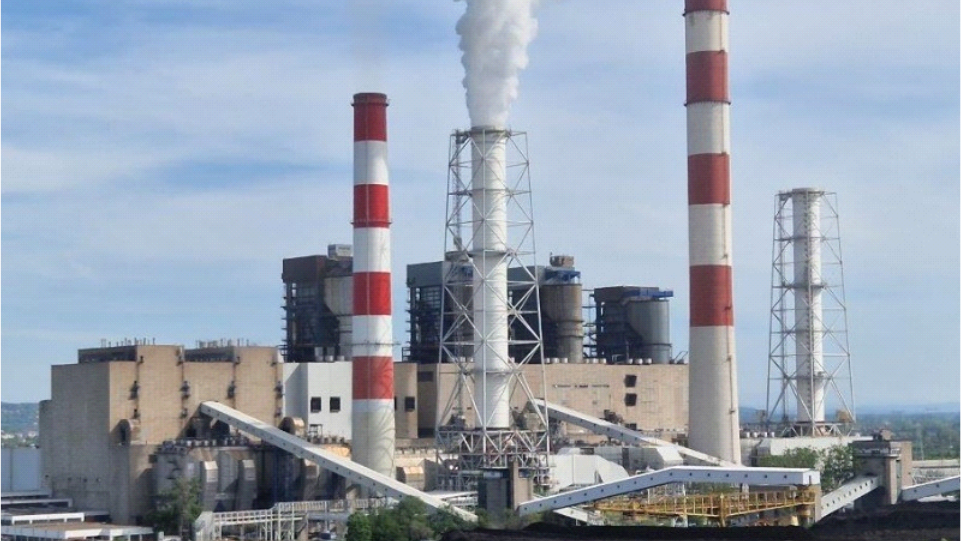
Since 2019, Akila has been involved in supervision and commissioning support for wet flue gas desulphurization projects at Ugljevik Power Plant in Bosnia and Herzegovina, and at Nikola Tesla A and Nikola Tesla B Power Plants in Serbia, under contracts with Mitsubishi Power, Ltd.
The scope covered key FGD areas including absorber installation, slurry recirculation systems, limestone handling, gypsum dewatering and associated systems. Beyond the technical scope itself, these projects also required close coordination in an international working environment and strong support during commissioning and operational preparation.
Challenges
One of the main challenges was the international character of the work. Projects of this type involve more than technical delivery alone. They also require coordination across different organisations, working cultures, project practices and communication styles.
Another important challenge was local adaptation. Experience from earlier projects provides a strong base, but it does not remove the need to respond to local regulations, site conditions, execution realities and project-specific constraints. In practice, this meant applying proven experience without assuming that every solution could simply be transferred unchanged.
A further challenge was the operational readiness of the client’s team. In this case, the work was not limited to supervising construction and completing commissioning activities. It also included helping prepare the client’s personnel for real use of the installation, particularly where prior experience with desulphurization systems was limited. That made knowledge transfer an important part of the project.
The final challenge was the need for fast on-site coordination in situations that were not always fully predictable. In complex industrial delivery, some issues only become clear in execution. Keeping progress under control required coordination between site teams, local participants, commissioning personnel and designers working across an international framework.
Akila’s role
Akila’s role covered both site management and commissioning management.
On the site side, the scope included coordination of works, daily and weekly meetings, supervision of works and subcontractors, spare parts management and supplementary deliveries.
On the commissioning side, the work included preparation of the commissioning manual, loop checks, individual equipment tests, functional tests, process tests and optimisation, performance testing, commissioning coordination, plant start-up and training of client personnel. In practical terms, this placed Akila at the intersection of execution, commissioning, cross-team coordination and operational handover.
Delivery approach
One of the strongest aspects of the approach was the ability to adapt previous project experience to new local conditions. The work did not rely on copying known solutions mechanically. Instead, earlier experience was used as a base and then adjusted to local legal, technical, geographic and organisational realities. One example was designing installation foundations in such a way that it would be resistant to earthquakes – something that wasn’t every done in Poland, but was necessary in the region.
Training and knowledge transfer were also an important part of the process. Commissioning was treated not just as a technical checkpoint, but as preparation for long-term operation. This included helping client personnel build confidence in operation, maintenance and process control, so that the installation could function reliably after the most intensive project phase had ended.
On-site coordination remained central throughout. In a multinational and multidisciplinary setting, even technically sound teams can fall out of sync. A major part of the work therefore involved keeping activities aligned, maintaining momentum and supporting practical decision-making where several groups had to move together.
Why this project mattered
This project stands out because it shows Akila operating in a broader international context, not only within one domestic market. It also demonstrates capability in FGD-related systems across several major installations and locations.
Just as importantly, it highlights a wider project role: not only supervision and commissioning, but also coordination across teams, local adaptation and transfer of operating knowledge to the client. That combination makes the project a strong example of interdisciplinary delivery in demanding conditions.
Outcome
The outcome was supervision and commissioning support for FGD installations in Bosnia and Herzegovina and Serbia, covering both key process systems and the preparation required for start-up and operation.
From a case study perspective, the most important result was the ability to combine technical support, practical coordination and client-side readiness in a complex international project environment.
The project received positive coverage in Serbian local press through comments made by the power plant’s director.
<REFERENCE>